Quick Answer:
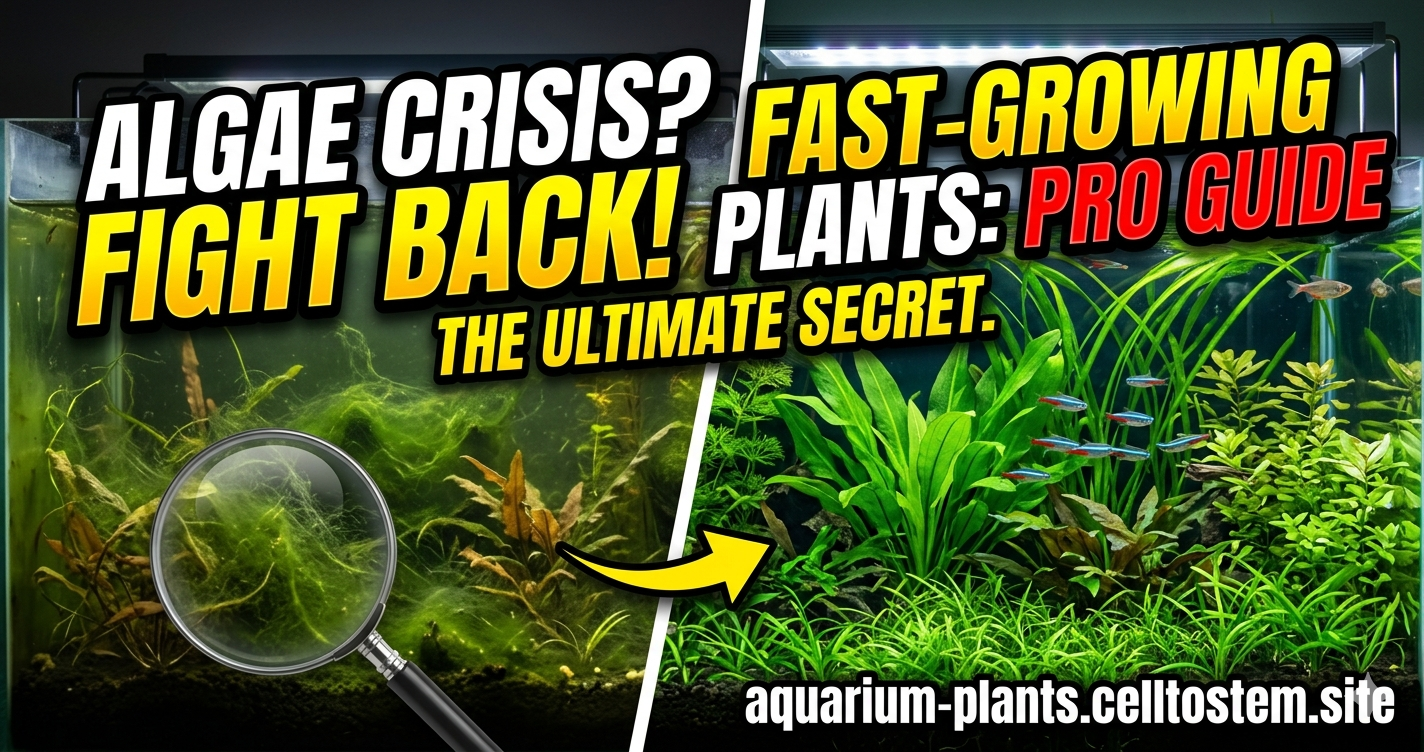
The most effective fast growing aquarium plants for algae control are those with high nutrient uptake, such as Hornwort, Water Sprite, and floating species like Amazon Frogbit. These plants “outcompete” algae by rapidly absorbing nitrates and phosphates while shading the water column, effectively starving algae blooms before they start.
The Green War: Why Your Tank Needs a High-Speed Garden
I still remember my first “green water” disaster. I had a beautiful 20-gallon long tank, a high-end LED light, and a vision of a crystal-clear underwater paradise. Instead, within two weeks, it looked like pea soup. I tried every chemical “algae fixer” on the shelf, but the slime just kept coming back. That was my “lightbulb” moment: I didn’t need more chemicals; I needed more competition.
In the world of aquascaping, algae thrives on two things: excess light and leftover nutrients (specifically nitrates and phosphates). If your plants aren’t eating that “food,” the algae gladly will. By introducing the best fast growing aquarium plants for algae control, you are essentially putting a group of hungry, efficient athletes into the water to eat all the snacks before the algae can get a bite.
My Secret Weapon: The “Nutrient Sponge” Strategy
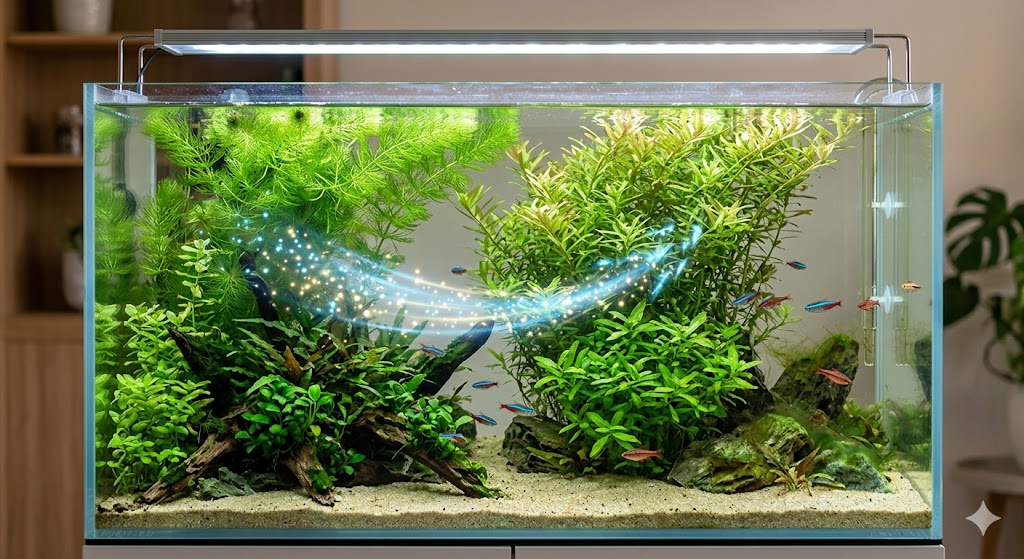
When I consult for beginners, I always talk about aquarium plant nutrient uptake. Think of your tank like a small room. If you leave out a pizza (nutrients) and turn on the heater (light), mold (algae) will eventually grow. But if you have five hungry teenagers (fast-growing plants) in that room, that pizza disappears in seconds.
The best aquarium plants to prevent algae blooms are those that grow so fast you can practically watch them move. This rapid aquarium plant growth rate is the engine that drives a healthy ecosystem.
Why Stem Plants are King
I’ve found that best stem plants for algae control—like Hygrophila polysperma or Limnophila sessiliflora—are unbeatable. Because they draw nutrients primarily from the water column through their leaves and stems, they act like vacuum cleaners for nitrates. In my personal “disaster tank,” adding a handful of Water Sprite changed the water quality from toxic to pristine in less than ten days.
Top Picks: The Best Fast Growing Aquarium Plants for Algae Control
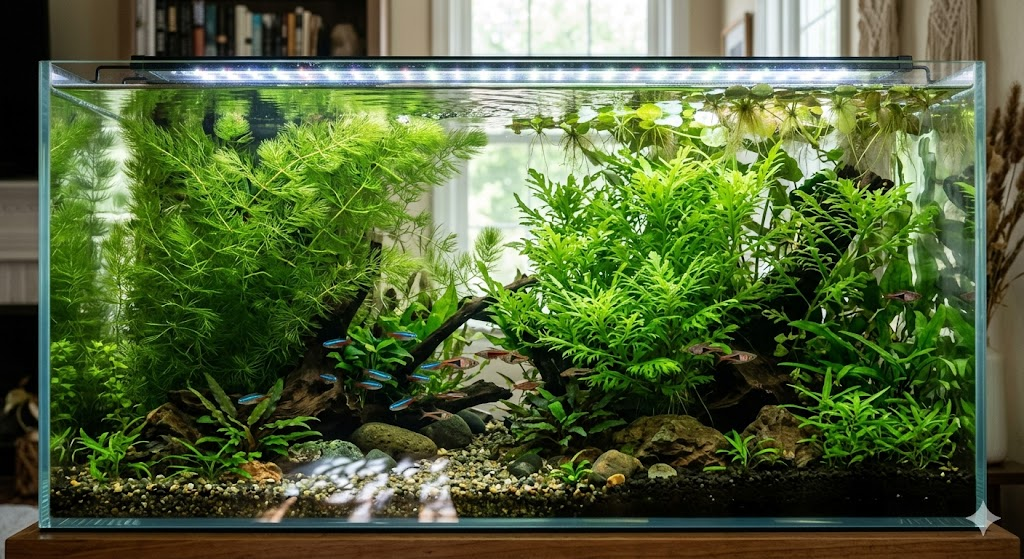
If you are just starting out, you don’t want finicky plants that require expensive CO2 setups. You want survivors. Here are the best fast growing plants for aquarium beginners that I’ve tested in dozens of setups.
1. Hornwort (Ceratophyllum demersum)
Hornwort is legendary. It doesn’t even have true roots; it just floats or can be tucked into the sand. It’s one of the best fast growing plants for nitrate absorption because it stays active even in cooler water.
- Pro Tip: Hornwort sheds its “needles” if the water parameters change too fast. Don’t panic! Just vacuum them up, and the new growth will be adapted to your specific water.
2. Water Sprite (Ceratopteris thalictroides)
This is my go-to for algae competition plants. It has lacy, beautiful leaves that provide tons of surface area for oxygenating plants aquarium benefits. It can grow as a floating plant or a rooted plant. I’ve seen a single sprig of Water Sprite take over a 10-gallon tank in a month.
3. Amazon Frogbit (Limnobium laevigatum)
If you struggle with hair algae, you need the best floating plants for algae control. Frogbit has long, trailing roots that look like an underwater jungle. These roots are massive nitrate suckers. Plus, the leaves block some of the light from hitting the bottom of the tank, which is a double-whammy against algae.
Low Light? No Problem.
A common myth is that you need “stadium lighting” to grow plants fast enough to stop algae. That’s actually dangerous because too much light usually starts the algae bloom. I’ve had great success with best low light plants for algae control like Anacharis (Elodea).
Anacharis is an absolute beast. It stays green even in dim corners and provides a massive amount of surface area for beneficial bacteria. When I was running a low-tech “Walstad” style tank with just a desk lamp, Anacharis was the only thing that kept the glass from turning fuzzy and brown.
The “Information Gain”: Lessons from the Trenches
Here is something the big manuals won’t tell you: Algae is a symptom, not a disease. When I see black brush algae (BBA), I don’t just reach for the scissors. I check my aquarium plant co2 requirements. Often, algae grows because your plants have “stalled.” If a plant runs out of one specific nutrient—let’s say potassium—it stops growing entirely. Even if there is plenty of nitrate, the plant can’t “eat” it without that missing piece. This is called Liebig’s Law of the Minimum.
My “Fail-Fast” Lesson
Early in my hobby, I thought I could stop algae by not fertilizing. I thought, “If I don’t add food, the algae will die.” I was wrong. My plants starved, began to melt, and released more ammonia into the water. The algae had a feast on the decaying plant matter!
- The Fix: Always provide a baseline of liquid fertilizer. Healthy, growing plants are the best defense. Low maintenance aquarium plants still need “multivitamins.”
Balancing the Equation: Light, Nutrients, and Flow
To master best plants for algae control in planted tank setups, you have to look at the “Golden Triangle.”
- Light Requirements: Keep your lights on a timer. 6 to 8 hours is usually the “sweet spot.” If you see green hair algae, drop it by an hour.
- Water Flow: Algae loves stagnant water. Ensure your oxygenating plants aquarium species are swaying slightly in the current. This moves nutrients to the leaves and prevents “dead zones” where algae spores settle.
- Maintenance: Fast-growing plants require trimming. When you cut a stem and remove it from the tank, you are literally removing nitrates from the system. It’s like taking out the trash.
Troubleshooting Common Algae Issues
Even with the best fast growing aquarium plants for algae control, you might hit a snag. Here is my “experienced human” guide to fixing problems:
| Algae Type | Likely Cause | Plant Solution |
| Green Water | Excess Nitrates/Light | Floating plants (Frogbit/Salvinia) |
| Brown Diatoms | New tank / Silicates | Fast-growing stems (Hornwort) |
| Blue-Green Algae | Low Nitrates / Poor Flow | Increase ferts + Rooted stems |
| Hair Algae | CO2 Fluctuations | Limnophila sessiliflora |
Final Thoughts: Let Nature Do the Work
If I could go back and talk to my frustrated self ten years ago, I’d say: “Stop fighting the water and start feeding the plants.” Using fast growing aquarium plants for algae control isn’t just a trick; it’s how nature stays balanced.
Start with something easy—maybe some Hornwort or Water Wisteria. Watch how they react to your water. Once you see those bright green new leaves popping out, you’ll know the “hungry teenagers” are at work, and your algae troubles will become a thing of the past.