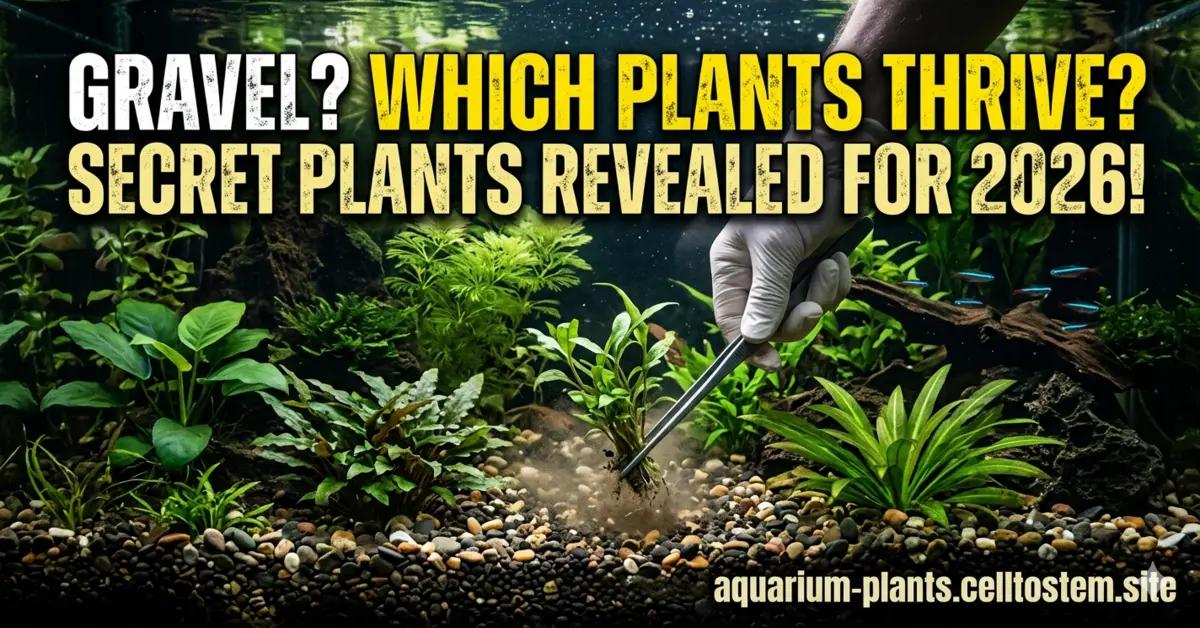
Quick Answer: The best gravel-friendly aquarium plants are Amazon Swords, Java Fern, Anubias, and Vallisneria. While gravel is “inert” (meaning it has no natural nutrients), these hardy species thrive if you provide root tabs for root-feeders or attach them to rocks and wood if they have a rhizome. With the right supplement routine, you can grow a lush underwater jungle without expensive specialty soils.
Why Gravel Doesn’t Have to Mean a “Dead Zone”
When I first started in this hobby, I thought I had made a massive mistake. I filled my 29-gallon tank with standard blue aquarium gravel, only to read online that “real” plants need expensive, muddy aqua-soils. I felt like I’d set myself up for failure before I even bought my first leaf.
But here is the truth I’ve learned after a decade of wet elbows: Gravel is actually a fantastic substrate for many plants. It’s stable, easy to clean with a gravel vacuum, and it doesn’t break down into “mud” over time like some active soils do. The “secret” isn’t the gravel itself; it’s understanding how different plants eat.
In this guide, I’m going to share the exact species that survived my early mistakes and the specific tricks I used to turn a pile of inert pebbles into a thriving ecosystem.
1. The Heavy Hitters: Best Root Feeders for Gravel Aquarium
If you want that classic “forest” look, you need root feeders. These plants pull most of their nutrients from the ground through their root systems. Since gravel contains zero nutrients on its own (it’s just rocks!), you have to “charge” it.
Amazon Sword (Echinodorus grisebachii)
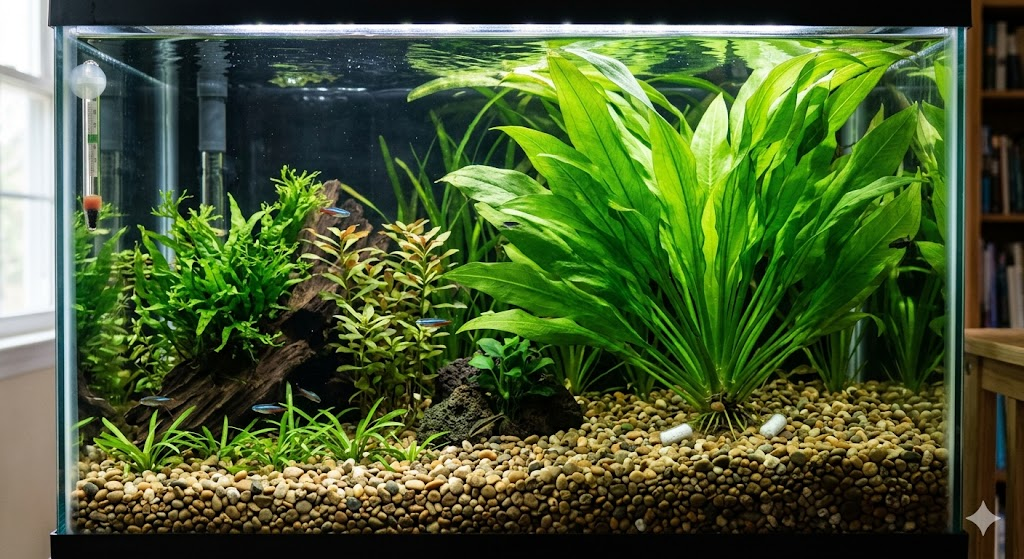
This is the undisputed king of the best tall plants for gravel substrate. My first Amazon Sword grew so large it actually pushed the lid off my tank.
- The Lesson: I once planted one and watched it turn yellow within weeks. I realized that in gravel, these are “hungry” plants.
- The Fix: You must use root tabs for aquarium plants in gravel. I tuck one tab right under the roots every 3 months. It’s like a slow-release steak dinner for the plant.
Cryptocoryne Wendtii
Crypts are the best gravel-friendly plants for beginners who want color. They come in bronze, red, and green.
- Pro Tip: Beware the “Crypt Melt.” When you first put them in gravel, they might lose all their leaves. Don’t panic! I once threw away a “dead” Crypt, only to find baby leaves growing in the trash bin. Leave the roots in the gravel; they will grow back stronger.
2. The Unstoppable “No-Planting” Crew
If you’re worried about burying things too deep, look for epiphyte plants for gravel aquarium. These have a thick stem called a rhizome. If you bury the rhizome in gravel, the plant will rot and die—I’ve killed at least five Anubias this way before I learned my lesson.
- Anubias Nana: These are the best aquarium plants for gravel and low light. You can literally just wedge them between two rocks or tie them to a piece of driftwood. Their roots will eventually grow down into the gravel to anchor them, but the main “branch” stays in the water.
- Java Fern: Similar to Anubias, these are aquarium plants that don’t need soil. I’ve found that Java Fern actually prefers a bit of “dirty” gravel. The fish waste that falls into the cracks provides just enough nitrogen to keep them happy without extra liquid dosing.
3. Creating a “Lawn”: Best Carpet Plants for Gravel Aquarium
Traditional “carpeting” plants like Dwarf Baby Tears are a nightmare in gravel. Their roots are too tiny to hold onto the large pebbles. However, I’ve found two reliable workarounds for a best foreground plants for gravel setup.
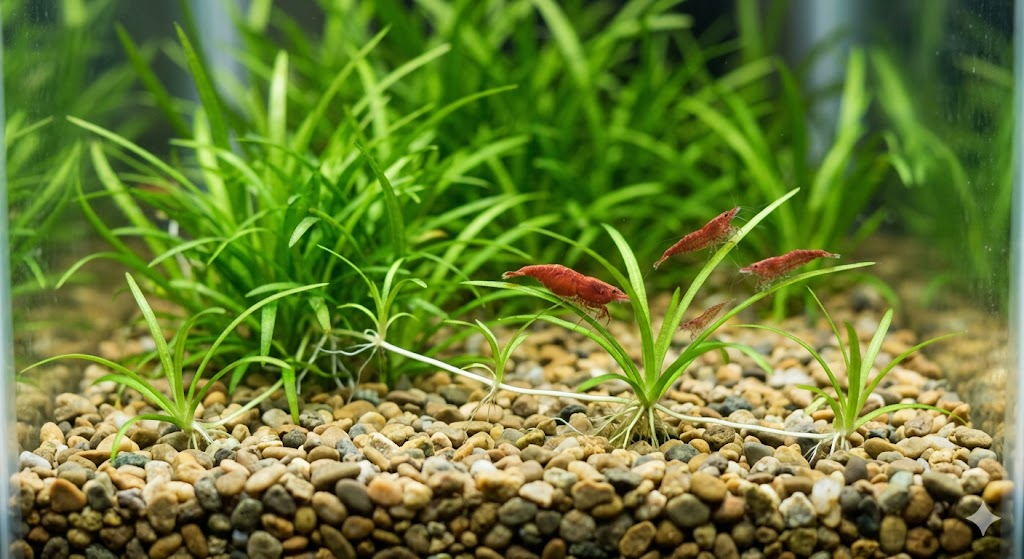
Dwarf Sagittaria
This is my go-to for a “grassy” look. It’s one of the best hardy plants for gravel without co2.
- My Observation: In gravel, Dwarf Sagittaria spreads slower than in soil, but the runners are much easier to manage. It creates a rugged, natural-looking meadow.
Java Moss Carpets
Since you can’t easily “plant” moss, I use the “Sandwich Method.” I take two pieces of plastic mesh, put a layer of moss in between, and weigh it down on top of the gravel. In six weeks, you have a soft, green carpet that is completely gravel vacuum safe because it’s heavy enough to stay put.
4. Background Beauty: Best Tall Plants for Gravel
To hide your filter and heater, you need height.
Vallisneria (Jungle Val)
Vallisneria is the ultimate low tech aquarium plants gravel choice. It looks like long ribbons of green grass that reach the surface and flow in the current.
- Troubleshooting: I noticed my Val stopped growing when I used too much liquid carbon (like Excel). Val is sensitive to certain chemicals. If you’re growing these in gravel, stick to root tabs and let the fish provide the rest.
Water Sprite
This can be planted or used as one of the best floating plants for gravel tank. If you plant it in gravel, it becomes a bushy, bright green background. If you let it float, its roots hang down like lace, providing a perfect nursery for baby fish (fry).
5. My Professional “Gravel Success” Checklist
After years of testing aquarium plants for inert substrate, I’ve developed a three-step system that works every time:
| Feature | Requirement for Gravel Success |
| Nutrients | Use Root Tabs for 100% of rooted plants. |
| Cleaning | Vacuum around the plants, never under them. |
| Lighting | 8 hours of moderate LED light; avoid “direct sunlight” to prevent algae. |
| Maintenance | Prune dead leaves immediately so the plant doesn’t waste energy. |
The “Gravel Vacuum” Mistake
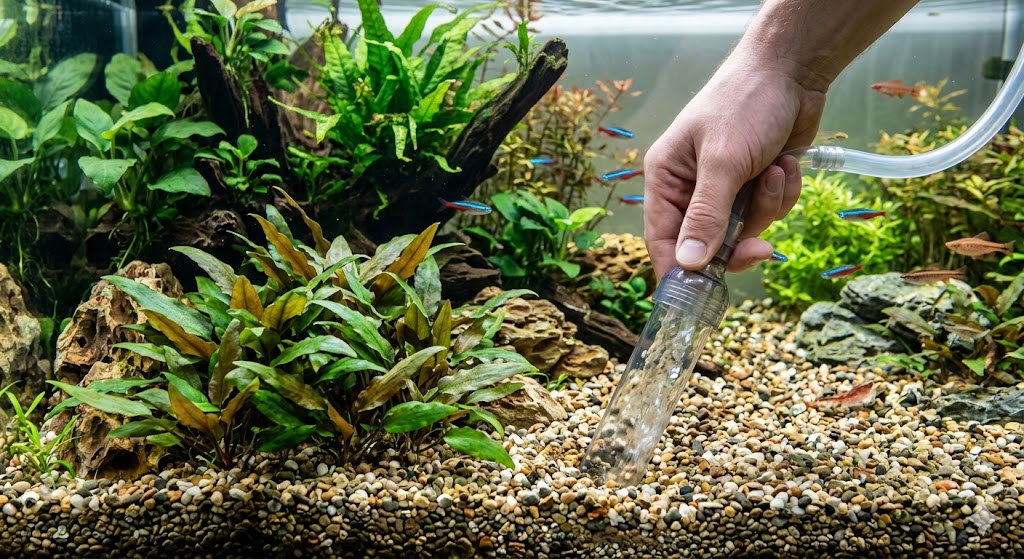
Here is a mistake only a human who has spent hours cleaning a tank would know: If you jam your gravel vacuum deep into the “root zone” of your plants, you will rip the delicate hair-roots that are trying to find nutrients.
- My Rule: I only vacuum the open “swimming areas.” I leave the gravel around the plants alone. This allows “mulm” (fish waste) to settle and act as a natural, free fertilizer.
6. Best Hardy Plants for Gravel (The “Indestructibles”)
If you have a “black thumb” or a goldfish that likes to dig, these are the survivors:
- Hornwort: You don’t even have to plant it. It absorbs nutrients directly from the water column, making it perfect for aquarium plants that don’t need soil.
- Java Fern “Windelov”: A variant with lacy tips. It’s tough as nails and looks incredibly exotic.
- Guppy Grass: Fast-growing and great for sucking up nitrates. It can grow in the gravel or as a floating mass.
Troubleshooting: Why Are My Plants Dying in Gravel?
If your plants are looking transparent or yellow, it’s usually one of three things:
- Iron Deficiency: New leaves look white or pale. Add a root tab specifically high in iron.
- Not Enough Light: The plant is getting “leggy” (stretching upward with long gaps between leaves). Move your light closer or upgrade to a full-spectrum LED.
- Rhizome Burial: If your Anubias or Java Fern is melting at the base, pull it out! Ensure that thick green horizontal stem is exposed to the water.
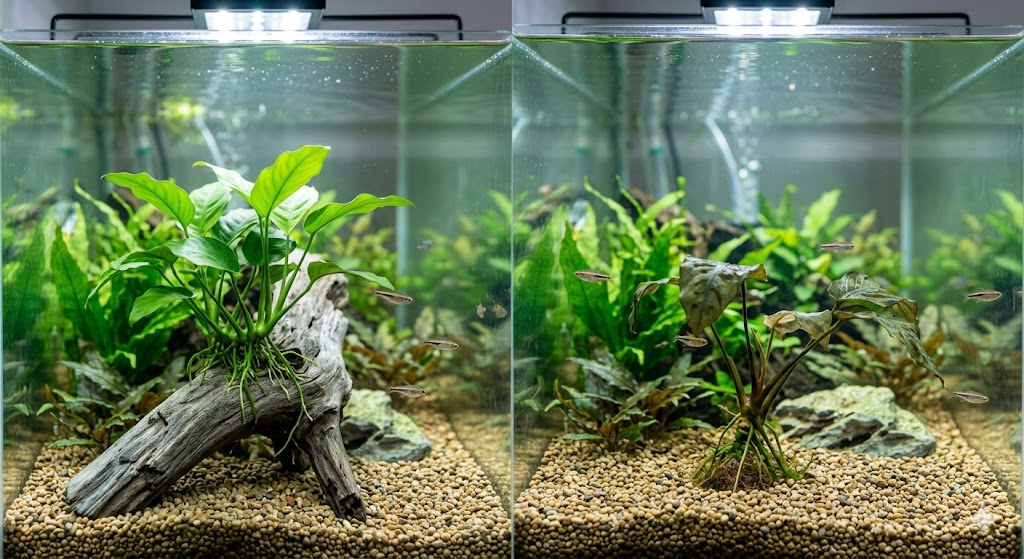
Summary of the Best Picks
For a successful gravel tank, I recommend a mix of these three categories:
- The Foreground: Dwarf Sagittaria and Java Moss.
- The Midground: Anubias (on rocks) and Cryptocoryne (in gravel with tabs).
- The Background: Amazon Swords and Jungle Val.
Growing plants in gravel isn’t “hard mode”—it’s just different. Once you master the art of the root tab and learn which plants prefer to be “untethered,” you’ll have a tank that looks like a professional aquascape for a fraction of the cost.
Frequently Asked Questions (FAQs)
Can I grow aquarium plants in regular pea gravel?
Yes! Most hardy plants like Amazon Swords and Java Ferns do great in pea gravel as long as you provide supplemental nutrients like root tabs.
Do I need a special light for gravel-friendly plants?
Most of the plants on this list are “low light” or “medium light.” A standard aquarium LED will usually suffice, provided it is on for 8 to 10 hours a day.
How often should I add root tabs to my gravel?
For heavy feeders like Swords, I suggest every 2 to 3 months. For smaller plants, every 4 to 6 months is usually plenty.
Will my fish dig up my plants in gravel?
Gravel is heavier than sand or soil, which actually helps hold plants down. However, for “diggers” like Cichlids, I recommend sticking with epiphyte plants tied to heavy rocks.
Learn More About Aquarium Care
For more information on balancing your tank’s ecosystem or choosing the right equipment, you can search for more guides here:
Search Google for “Best Aquarium Fertilizers for Gravel Substrate”
Search Google for “Low Tech Aquarium Setup Guide 2026”
Thank You For Visting Our Website https://aquarium-plants.celltostem.site/. We Value Your Feedback!